


Explainer
Queer sexuality
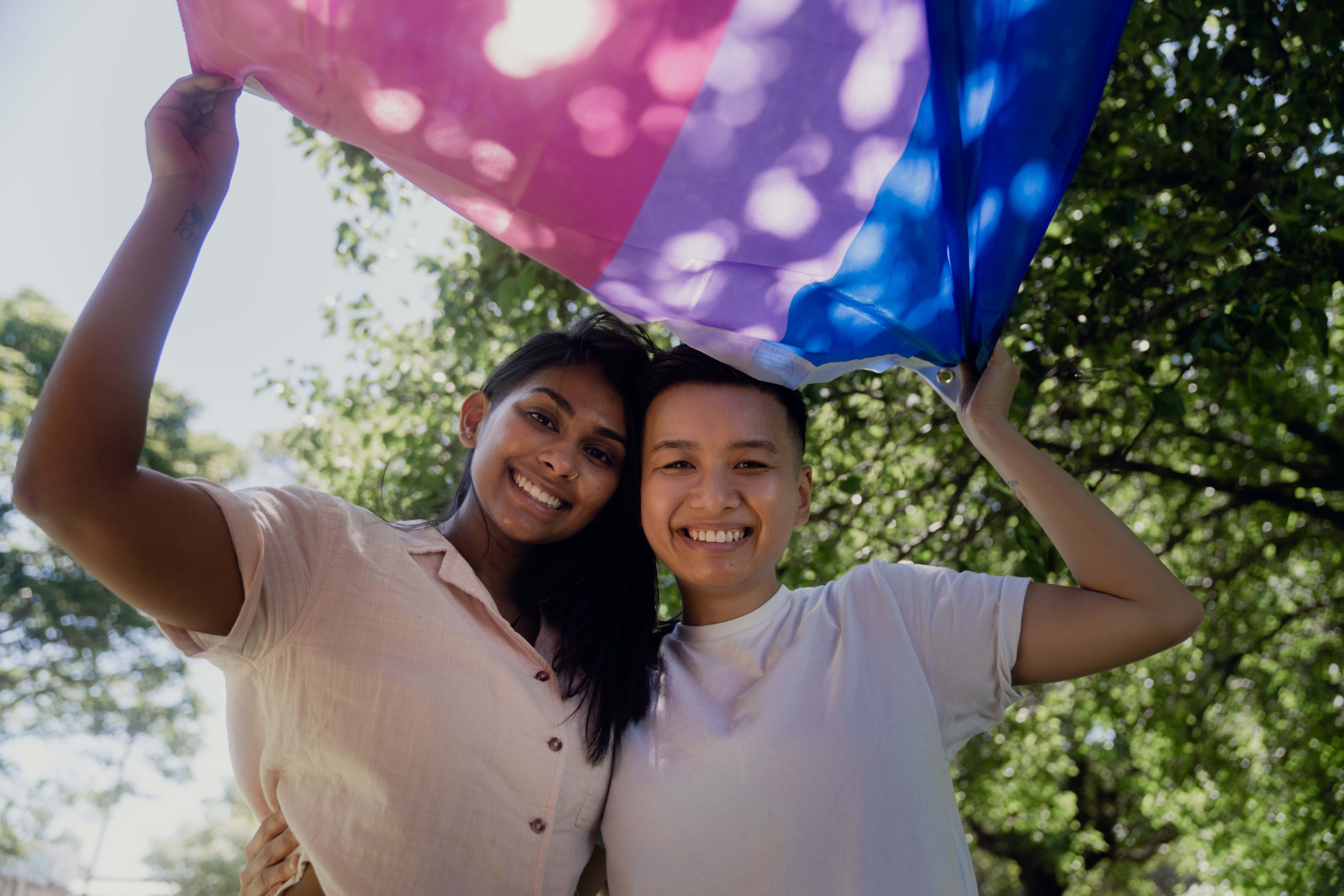


What is queer sexuality?
Queer sex and sexuality are expansive.
It is powerful, it is explorative, it is messy, and it is uniquely ours! Without proper guides and realistic examples to look through, it can be easy to feel you’re fumbling through sexual encounters, or doing a lot of guess work.
Dating or having sex as a lesbian, bisexual or queer person – irrespective of what genitals we are born with or have – can feel like a lesson in trial and error. We often don’t have access to examples or guidebooks on what our sex can look like, or even how to go on dates or initiate sex!
Word on the Sheets aims to speak to queer pleasure, sex and intimacy, as well as provide factual and relevant sexual health information about STIs, sexual health checks, and tips on how to navigate health systems.
By and for queer community
Our sex does not look a certain way, and there is no one way of doing it. In this resource, we aim to provide information that is useful and practical for people who did not see themselves reflected in state-mandated ‘sex education’, and continue to be left out of mainstream sexual health information and guidelines. This resource has been created by and for LGBTQ+ women, their partners and the broader queer community, to provide the inclusive sexual and reproductive health info that matters.
History of LGBTQ+ women
There are multiple historical forces that have shaped the lack of visibility of – and lack of information for – LGBTQ+ women in this country. It is impossible to speak about histories within Australia without acknowledging the fact that it has been shaped by the brutal legacies of British colonisation.
The British brought racism, patriarchy, a binary gender system, and queerphobia to Australia.
Homosexual activity between men, or ‘sodomy’, was illegal in Australia from 1788 to 1994 (punishable by execution or life in prison). Sex between women however, has never been illegal in this country. This exclusion from legislation is bittersweet; it may sound like a privilege, but it likely came from the invisibility of lesbian experiences, rather than a place of acceptance.
Society has taught most women that we are objects of sexual desire, not active sexual agents. Our sexuality, pleasure, or sexual health has never been a priority.
We need only to look to medicine and the health care system for examples of patriarchy in action – that most medical studies have been conducted by male researchers with male participants, that the burden of contraception is on women, the staggering rates of misdiagnosis among women, the list goes on. These structural barriers to safe, affirming care only increase for women with multiple marginalised identities, such as women of colour, trans women, disabled women and First Nations women.
As a result of these forces, LGBTQ+ women’s pleasure and sex has historically been invisible.
Terminology and our bodies
‘LGBTQ+ women’ refers to transgender women, non-binary women, bigender or multi-gender women and cisgender women.
These resources will discuss bodies and sex broadly, without using exclusionary or essentialist language. Non-binary and trans masculine people and other community members may find our resources helpful and relevant, as we are not prescribing certain experiences to anatomy or gender.
Particularly within the LGBTQ+ community, the way we understand and talk about our experiences, identities and bodies is constantly evolving. We acknowledge that despite our best efforts, language will never perfectly encompass the experiences of everyone in our communities. To speak to all women who identify as lesbian, gay, bisexual, trans, queer, plus (LGBTQ+) is already an incredibly difficult undertaking as our experiences are vast and varied. For brevity, “queer” is sometimes used on this website as shorthand for, and synonymous with, LGBTQ+. We recognise that this term too, is imperfect and may not resonate with the experiences of all LGBT women, due to the pejorative historical connotations of the term.
Diversity of sexual partners and practices
LGBTQ+ women are a diverse group that have even more diverse sexual partners and practices.
The partners of LGBTQ+ women can be people of any gender and sexual orientation which is particularly relevant and important when navigating our sexual health practices. This resource will speak to the diversity of our sexual experiences, regardless of the genitals or gender of the people we sleep with.
Read more about LBQ women’s sexual partners and practices in SWASH survey reports.
Keep reading



Or explore more on

We’ve got you covered
Your free Play Pack includes everything for safer sex, delivered discreetly because you deserve to focus on the fun stuff.